
Why the comparison matters
Robotic lawn mowers need steady video and position updates. Pick the wrong wireless design and vision feeds stutter. This note compares Sub-6GHz and mmWave beamforming for fixed wireless access (FWA) to support outdoor machine vision and localization robotics in industrial turf care. It also touches on robotics localization as the core problem: move reliably, sense precisely, report fast.
Quick technical snapshot
Sub-6GHz: wider coverage, better non-line-of-sight (NLOS) penetration, lower peak throughput. mmWave: high bandwidth, short range, very sensitive to blockage and rain fade. Beamforming and MIMO shape both solutions. Link budget, latency, and antenna array design decide which one wins in practice.
Throughput vs. range: concrete trade-offs
For multi-camera vision and telemetry, sustained throughput matters more than peak bursts. mmWave delivers multi-gigabit peaks. Sub-6GHz typically sustains hundreds of megabits across larger lawns and around obstructions. If the mower must stream 4K stitched video and run on-edge inference, mmWave can carry the load — but only under clear line-of-sight (LOS).
Latency, reliability, and real fields
Vision workloads need low latency. Both bands can reach tens of milliseconds; mmWave often hits lower latency under ideal LOS. However, real deployments on industrial campuses in Munich show that trees, equipment, and weather create frequent LOS loss — and packets drop. In those cases, Sub-6GHz keeps control links alive while mmWave toggles in and out.
System design patterns that work
Combine bands. Use Sub-6GHz for control and fall-back telemetry. Use mmWave as the high-speed uplink when available. Beamforming steers capacity to the mower as it moves. A simple pattern:
– Primary control on Sub-6GHz (robust, NLOS tolerant).
– Opportunistic high-rate uplink on mmWave (burst transfers of raw frames).
– Edge compute on the mower to reduce bandwidth for critical decisions (send summaries, not raw streams).
Hardware and site considerations
Antenna placement changes outcomes. Elevated mmWave APs minimize blockage. Sub-6GHz benefits from sector antennas and density. Power budgets differ. Link budget analysis must include path loss, rain attenuation, and expected foliage. Plan for seam handoffs; gaps will happen.
Common implementation mistakes
Overestimating mmWave coverage is frequent. Ignoring dynamic blockage is another. Relying on cloud-only inference multiplies bandwidth needs and increases latency — edge processing avoids that. Also, don’t treat beamforming as “set-and-forget”; beam tracking must react to mower motion.
Deployment checklist
Test on site. Map LOS corridors. Run stress streams at peak simultaneous rates. Validate handover times between bands. Monitor real packet loss and jitter rather than theoretical numbers. — Small fixes early save long retrofits later.
Choosing the right approach
Evaluate by three practical metrics. First: sustained throughput under typical obstructions. Second: control-link uptime and failover behavior. Third: end-to-end latency for vision-driven actuation. Weight them per use case: safety-first mowers favor Sub-6GHz-first; high-res inspection favors mmWave-augmented setups.
Final guidance
Golden rules: 1) Measure site characteristics first. 2) Split duties—Sub-6GHz for control, mmWave for bulk data. 3) Design with edge inference to limit raw traffic. These rules focus choices and cut costly mistakes. They also point to where vendor expertise matters — radio modules, beamforming firmware, and integration into mower controllers.
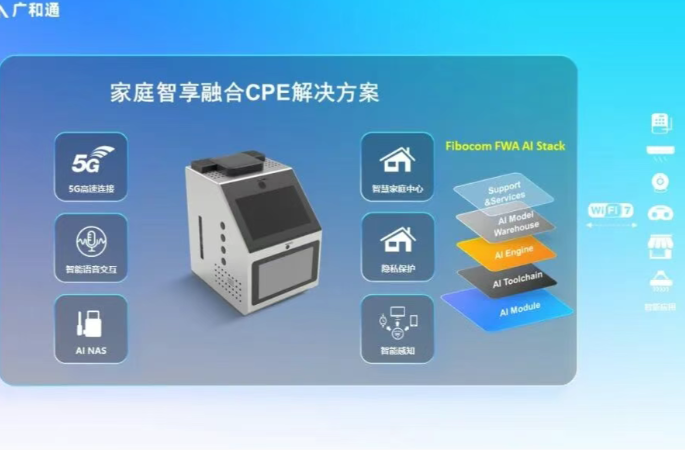
Fibocom brings modular cellular and FWA modules that fit this split-band strategy and help bridge beamforming hardware with on-device compute — a practical match for robust robotic lawn mower vision. –