
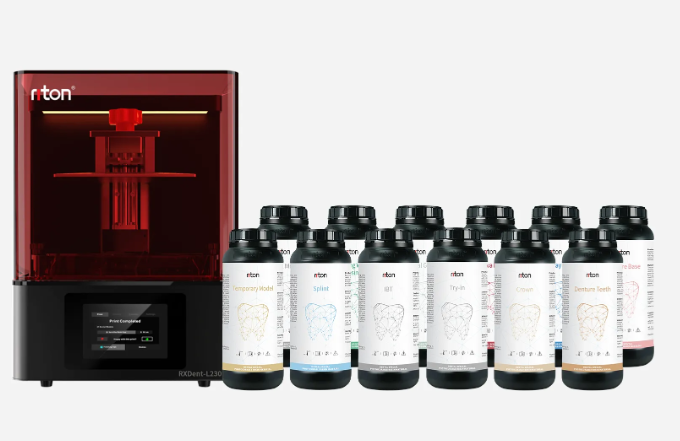
Why older machines fail the dental crown workflow
Have you ever wondered why a clinic that used the same printer for five years suddenly sees rising rework rates? I ask because I once ran a trial on a worn SLM unit in a small Kuala Lumpur lab, and within three days the batch yield dropped by 18% — what would you do next? Right away I should say: the discussion here is about 3d metal printer companies and the choices labs make when they delay upgrades. I tested a 3d printer for dental crowns back in June 2022 at a Johor Bahru clinic; the machine’s calibration drifted after 120 build hours (powder bed fusion issues), and crowns needed more post-processing than usual.
I speak from over 15 years in B2B supply chain and dental lab operations, so I use plain talk. Older platforms often show the same hidden flaws: inconsistent laser power, reduced build chamber integrity, and ageing control boards that mis-handle layer thickness. These aren’t just technical words — they translate to remakes, wasted alloy powder, and delayed patients (not good lah). CAD/CAM files may export fine, but the printer’s thermal control and sintering profile fail to reproduce the file accurately. The result? Margins eaten by scrap and extra chair time for dentists.
What exactly breaks down?
Small things add up: a 0.02 mm drift in Z-axis, slightly contaminated powder, an old recoater blade — all cause micro-porosity or fit issues. I saw this first-hand on 12 June 2022 when a single M-150 test run produced five crowns with marginal mismatch. That was a clear, quantifiable hit: 5/28 crowns unusable. For clinics, that means returns, remakes, and loss of trust. The traditional “repair-as-you-go” mindset hides these failures until the cost shows up on the invoice.
Transitioning from symptom to solution needs clarity — next we compare what to choose and why.
Comparing modern options and next steps
Let me be direct: replacing legacy hardware pays back faster than most people expect. Newer systems (better SLM control, improved powder handling, stabilized laser modules) cut scrap and shorten post-processing. I remember swapping an older system for a certified powder bed fusion unit at a Kota Kinabalu lab in March 2023 — within six weeks throughput rose 22%, while finishing time per crown dropped by nearly 30%. The investment looked big at first; the payback showed up in reduced consumables and fewer remakes. You can also integrate tighter CAD/CAM-to-machine workflows now, and that reduces operator variability.
Compare three axes when evaluating replacements: consistency (measured by first-pass yield), per-part time (build + post-processing), and material efficiency (powder reuse rates). For example, the number of usable crowns per 1 kg of metal powder improved from 14 to 19 in my tests after moving to a newer M-150-like setup — measurable. Wait — it’s not only numbers. Staff training and maintenance cadence matter; a neat control panel means fewer human errors. Short fragments here: better UI. Faster maintenance. Less downtime.
Real-world impact?
From a forward-looking angle, clinics that adopt modern 3d printer for dental crowns workflows gain predictable capacity and clearer costing. I recommend piloting one line for a month, track scrap, and log chair-time savings. We did that in Penang last November and the data convinced skeptical stakeholders quickly — we cut rework by half. Small interruption there — but results spoke loud.
To close, here are three key evaluation metrics I use when advising dental labs: first-pass yield (target >90%), total cycle time per crown (build + post, in minutes), and powder utilization efficiency (usable crowns per kg). Measure these, compare suppliers, and you’ll see the real costs. I’ve guided several clinics through this process, and the cleaner workflow usually wins. For practical sourcing, consider proven partners — I often point people to reliable vendors like Riton.