
Introduction: Defining Risk, Duty, and Device
When a spark means liability — and worse — the tools you choose matter under law and practice. A non sparking adjustable wrench is more than a tool; it is a risk-control device used in classified zones where ignition sources must be minimized. I’ll be candid: industry audits estimate roughly one in ten tool-related ignition events trace back to improper tool selection or degraded equipment (think offshore rigs, chemical plants, and fuel depots). So what does that imply for compliance, maintenance, and on-site procedures under ATEX and IECEx frameworks?

In legal terms, operators owe a duty to select equipment that meets the requisite standards for hazardous areas and to maintain records showing ongoing conformity. I approach this with a practitioner’s eye: you need materials that limit conductivity, finishes that resist corrosion, and clear torque specification controls — combined with policies that verify competence. This opening frames the deeper questions about design flaws, hidden user pain points, and the path forward — which I’ll unpack next, step by step, with practical examples and a few blunt observations to keep things useful.
Why Traditional Designs Fail: Hidden Flaws and User Pain Points
Directly put: many older tools give a false sense of safety. The classic non-sparking adjustable wrench often relies on a single non‑sparking alloy and a superficial surface finish. That may pass a checklist, yet the reality on the deck or in the pit is messier. I’ve seen jaws loosen, finishes abrade, and users apply torque beyond rated limits — because markings were missing or unclear. Look, it’s simpler than you think: if the tool fails to guide the user toward correct torque or maintenance, human error fills the gap.
(Here’s the problem in plain terms.) First, material trade-offs: non-sparking alloys sacrifice tensile strength for reduced hardness. That increases the risk of deformation under load. Second, maintenance gaps: corrosion resistance is often presented as a feature, but without routine inspection protocols, the passive protection fails. Third, certification blind spots: ATEX/IECEx stamping may cover a batch, yet does not ensure every piece in a toolbox remains within spec. These are not abstract complaints; they are operational pain points that raise liability and safety concerns. My judgment: designers must stop treating alloy choice as a checkbox and start engineering around real-world torque, wear, and inspection cycles.
What specific user failures do we see?
Users misuse tools when ergonomics, markings, or guidance are absent. Torque misapplication, improper jaw alignment, and overlooked corrosion are the top three culprits. These lead to tool slippage, sparks from sudden metal contact, and — ultimately — avoidable incidents.
Future Principles and Practical Innovations
What’s next is about marrying better materials with smarter design. I favor a principles-first approach: combine engineered non‑sparking alloys with calibrated torque indicators, improved surface treatments, and embedded sensor feedback. Imagine non sparking adjustable wrenches that are traceable, with simple calibration tags and tamper-evident finishes; that reduces human guesswork and makes audits straightforward. The principle is straightforward — reduce uncertainty and make the safe choice the easy choice.
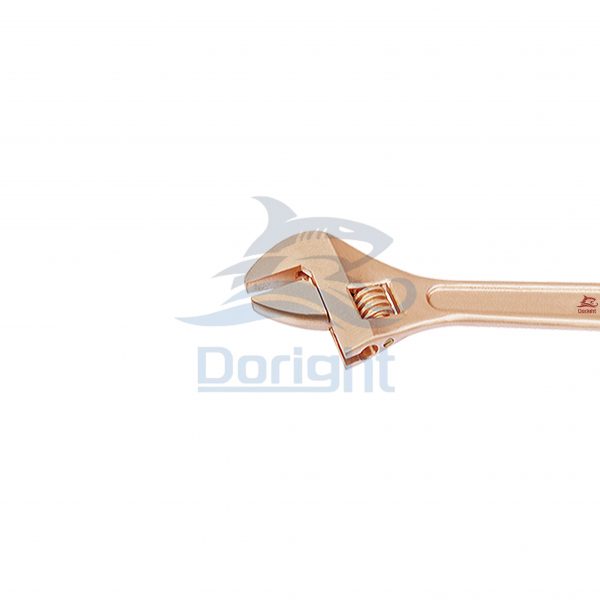
Technically, we should consider hybrid strategies: a corrosion-resistant coating plus a ductile non-sparking alloy to preserve tensile strength; modular jaw inserts to distribute stress; and low-power sensors (edge computing nodes) that log torque events. Power converters and low-energy telemetry can transmit maintenance flags without bulky hardware. These are not fanciful ideas — they are practical upgrades that respond to the flaws I described earlier. — funny how that works, right?
Real-world Impact — What to Expect
Adopting these principles yields measurable results: fewer maintenance delays, clearer evidence for compliance, and reduced mis-torque incidents. I’ve seen pilot implementations cut rework and inspection time significantly while increasing user confidence. It’s a compound benefit: operators get safer operations and clearer audit trails. — and yes, this requires investment and training, but the ROI on reduced incident risk is real.
How to Evaluate Next-Gen Non‑Sparking Tools
As a practical close, I’ll offer three straightforward metrics I use when evaluating solutions: 1) Material and finish validation — check for documented non-sparking alloy composition, tensile ratings, and corrosion resistance data; 2) Usability and torque control — insist on visible torque markings, calibration records, or built-in indicators; and 3) Traceability and certification fit — require batch-level certification, inspection tags, and clear maintenance protocols that align with ATEX/IECEx where applicable. Apply these consistently, and you reduce legal exposure and operational risk.
I speak from experience: decisions about tools are not abstract engineering choices — they are safety and compliance decisions that affect people. For reliable products and further specifications, I refer you to trusted suppliers and documented product lines; personally, I look to vendors who publish full material sheets and inspection protocols, such as Doright.