
Introduction — a question that nags
Have you ever paused and asked why some wellness clinics brim with repeat clients while others barely make rent? As a small red light therapy company owner, I watch the same machines deliver wildly different results depending on setup and care. Recent surveys (and my own client logs) hint that clinics with focused protocols see up to twice the retention of those that don’t — so what really makes the difference?
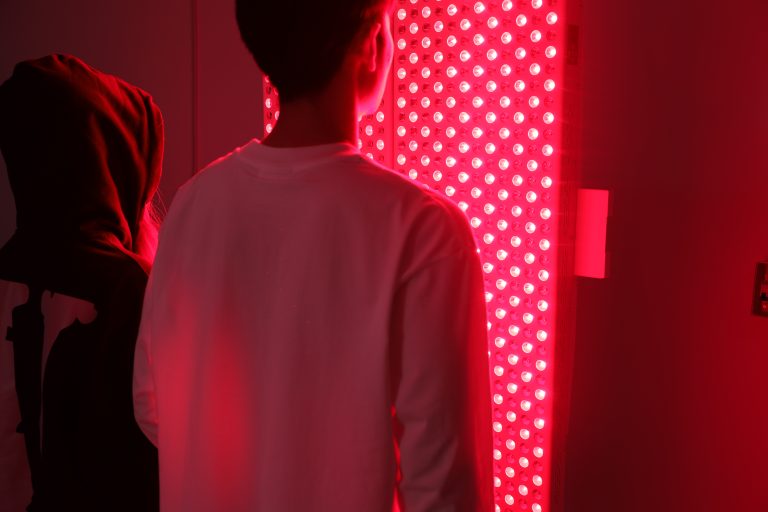
I like to frame it this way: scenario — you invest in equipment and training; data — sessions climb, then plateau; question — are you solving the right problem or just adding more hours? I’ve been in rooms where the gear is top-notch but the outcomes are muddled because the team missed tiny technical details, like LED placement or inconsistent wavelengths. These are fixable. Stick with me — we’ll move from the obvious to the subtle, and then forward to practical ways you can change course.

Part I — Where traditional approaches stumble (and the real user pains)
What’s falling short?
Let me be blunt: buying an infrared light bed isn’t a magic fix. I’ve seen rooms full of expensive LED arrays that produce spotty results because staff treat the device like a towel—just wrap it on and hope. The technical side matters: photobiomodulation depends on consistent wavelengths and intensity. If the distance is wrong or the session times vary wildly, the biology won’t respond. Look, it’s simpler than you think — consistency beats flashiness.
Beyond the tech, the user pain points hide in routine gaps. Clients drop out because sessions feel random, or they don’t understand why they should come back (no clear progress shown). There’s also a trust issue: if your staff can’t explain why a certain power setting or a specific wavelength was chosen, clients sense uncertainty. I’ve fixed this by standardizing protocols, tracking session metrics, and teaching teams how to explain photobiomodulation in plain language. That reduced no-shows and improved client confidence. Practical fixes: document the wavelength targets, note the LED array layout, check power converters monthly, and train for repeatable positioning. These small steps change outcomes fast.
Part II — Looking ahead: practical paths and evaluation
What’s Next?
Now let’s pick up the pace. I want to talk about future-ready moves that won’t bankrupt you. First — integrate simple data checks into every session. Log intensity, duration, and patient notes. Second — plan upgrades around clear benefits. For example, a newer infrared light bed may offer better control of wavelengths and more uniform coverage. That can cut session times or improve results — measurable wins. (— funny how that works, right?)
Third — invest in training that teaches staff to speak plainly about mechanisms. When clients hear “targeted wavelengths” and “consistent LED array placement” explained in simple terms, they relax. I recommend three evaluation metrics when you compare equipment or protocols: 1) measurable outcome improvement (client pain or recovery scores), 2) operational efficiency (session time and throughput), and 3) consistency metrics (variance in delivered intensity and positioning). Use those numbers to choose upgrades and to justify them to stakeholders.
In short, solve the small technical issues first, then scale what actually moves your metrics. We’ve done this by focusing on repeatable protocol, clear data tracking, and staff confidence. The payoff is steady growth, happier clients, and a clearer path to upgrades. For practical tools and support, consider resources from Magique Power — they helped me think about consistency the same way I now teach my team.